

































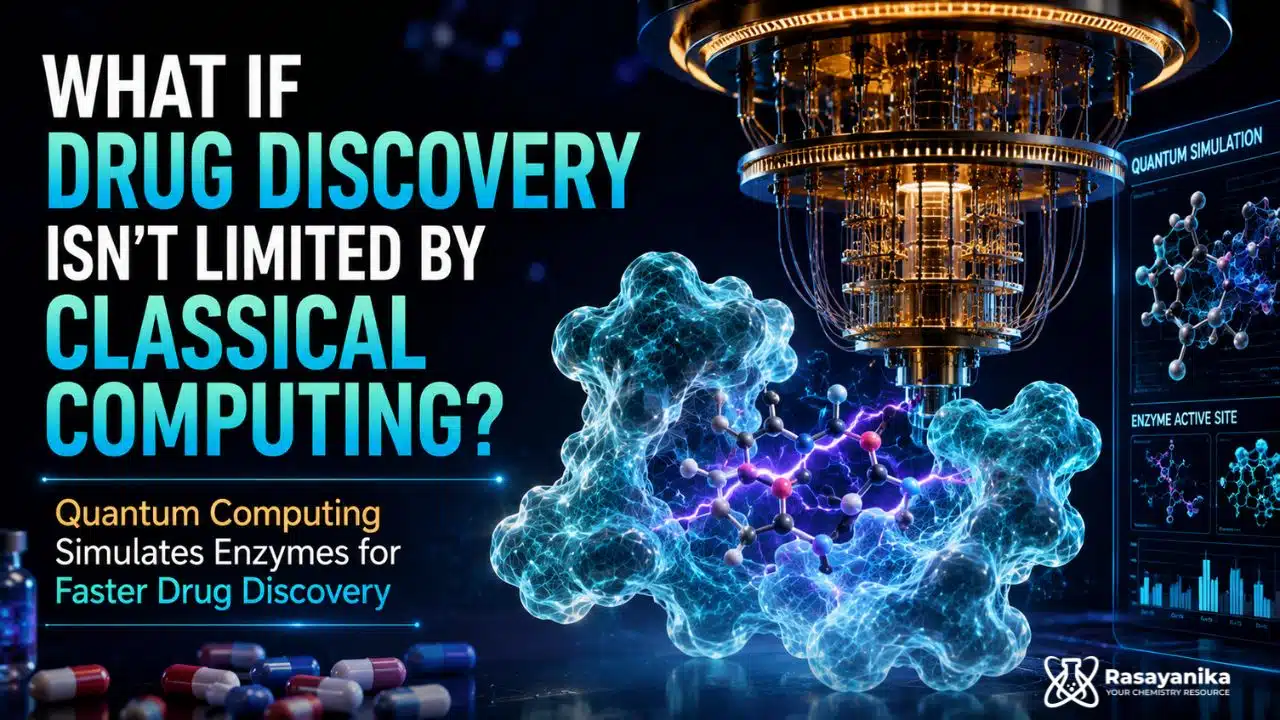
Is Quantum Computing the Future of Drug Discovery? A Breakthrough Study Says Yes
The transition from theory to practice for quantum computing is underway and can be seen with the help of a new study that looks at how quantum computing is being used to help advance the field of drug discovery. Researchers have successfully simulated the interactions of two enzyme molecules that contain a total of nearly 12,000 atoms to test their potential interactions with many compounds. Thus, these are the largest biological molecules that have been successfully modeled using quantum computing.
Quantum computing systems can successfully simulate highly complicated chemical structures usually impossible to solve using conventional computing. Kenneth Merz, one of the researchers leading this effort, believes that this new study demonstrates both the growing power of quantum computing systems and the potential benefits of quantum computing to help solve the challenges we have in drug discovery. The findings from this study have been posted as a preprint in order to further highlight the rapid development of this area of technology.
Why Is Quantum Computing Important to Drug Discovery and Chemistry
The reason quantum computing is so important in Chemistry is that it follows the fundamental laws of quantum mechanics. Since all interactions between molecules happen at the quantum level, quantum computers can represent those interactions much better than classical computers can.
Even with the potential for quantum computers to provide answers for a long time, there are several issues that have limited their use in the real world. These issues include hardware reliability and limited computing power. However, there have been a number of advancements recently that suggest those problems are being solved. Many of these advancements have come from using hybrid methods of computing, where quantum and classical computing are used together.
This advancement will be very beneficial to scientists in drug development by providing them with a better understanding of how drugs interact with life-based molecules and thus improving the efficiency of the drug discovery process.
Advances on a Global Scale: Advances in Cancer Treatment to the Future of Quantum Genomics.
The advancement of quantum computing technologies worldwide has been enhanced by several initiatives, including the Wellcome Leap Quantum for Bio challenge, which has invested 50 million dollars to research and test the applications of quantum computing in biology and medicine.
Algorithmiq is one of the leading projects that have conducted a large portion of their work with IBM and the Cleveland Clinic to demonstrate how quantum computer systems can replicate the interactions between an experimental cancer treatment and light, giving researchers new insights into how this type of drug works. During this time, Sabrina Maniscalco stated that this method not only produced superior results than the previous classical methods but also indicated that as more complex molecules were simulated, the quantum system used had the potential to scale successfully.
In addition, a major achievement in quantum computing occurred at the Wellcome Sanger Institute, where scientists encoded the genome of the hepatitis D virus into a format that can be run on a quantum computer. As outlined by James McCafferty, the successful encoding represents the beginning of future quantum-based genomic analysis.
Major advancements made in the previous phase include:
- The simulation of light-directed cancer treatments using quantum systems
- The combination of machine learning and quantum computing models
- Successful encoding of viruses in formats that can be processed by a quantum computer
- Initial work toward the development of large-scale genetic and personalized medicine endeavors
These advancements indicate that quantum computing is expanding beyond theoretical research and moving into practical applications across multiple areas of life sciences.
Future of Quantum Computing in Life Sciences
The development of quantum computers for drug discovery and biomedical science will have an increasing impact on the future of life sciences. The majority of the research teams that have achieved these breakthroughs have used a range of quantum computing systems created by IBM due to their cost-effectiveness and speed, along with the number of qubits that are currently usable.
Quantum computers still have some time before they will provide quantum advantage in real-world applications, and therefore most of the current results are still primarily experimental. However, they create a foundation for future applications.
According to Jerry Chow, he has stated that by 2030, quantum computers could be utilized for drug discovery and biomedical applications on a large scale. Furthermore, companies such as Qubit Pharmaceuticals are already presenting investments in quantum computing-based molecular discovery, which is a very positive indicator of how active the growing industry is.
The most recent studies have shown that quantum computing will become an incredible tool for drug discovery and biomedical discovery by providing highly accurate simulations of complicated molecular systems, which will eventually change the way pharmaceuticals are created and how diseases are investigated.
Although many challenges still exist, the steady advances in this area suggest that quantum computing will become a significant part of healthcare innovation soon and have a tremendous impact on chemistry, genomics, and personalized medicine.