




























Sustainable Chemistry Turns Plastic Waste into a Hydrogen Production Solution
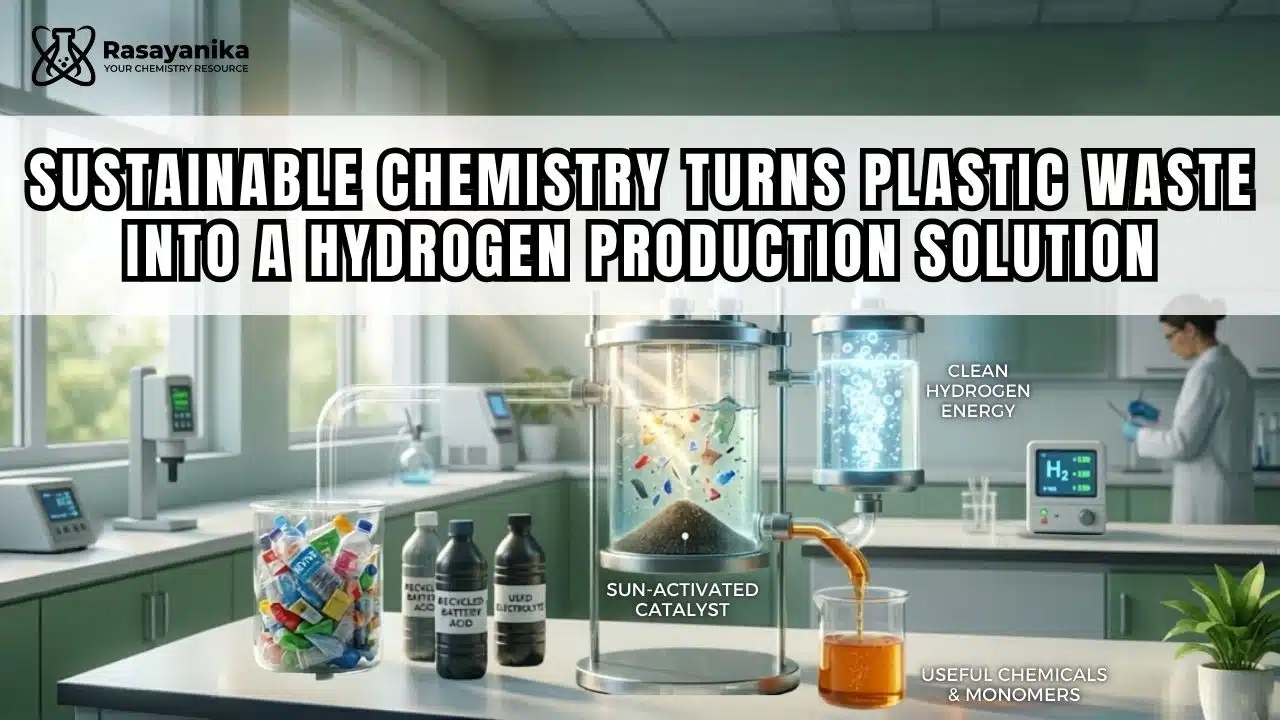
Scientists have developed a new way to turn plastic waste into useful products like hydrogen and valuable chemicals. What makes this method special is that it also uses old car battery acid, creating a smarter and more eco-friendly way to recycle common plastics such as polyurethane, PET, and nylon. This work is a good example of sustainable chemistry, as it focuses on reusing waste in cleaner ways.
The Department of Chemistry and St. John’s College at the University of Cambridge have noted that one of the biggest challenges in processing plastics is breaking them down into their base form. Historically, this has been done with either very toxic alkaline chemicals (often requiring a long period of time) or by means of biological processes that rely on slow-moving enzymes.
The researchers from this project have developed a new type of molybdenum-cobalt photocatalyst that works well in acid-based conditions, which significantly increases performance over traditional recycling methods. Previous photoreforming techniques primarily focused on one type of plastic- polyethylene terephthalate (PET); however, with the new technology, it will also be possible to reform/recycle other types of plastics such as polyurethane and nylon.
Reisner explained that plastics are not just waste but contain valuable building blocks that can be reused to make new products. The aim is to support a circular system where plastics are reused again and again. This idea strongly supports sustainable chemistry and reduces dependence on fossil fuels.
Alexandra Barth, a photocatalysis expert from North Carolina State University in the US, said that PET, polyurethane, and nylon are widely used in packaging, coatings, and textiles. Despite this, recycling is still limited, and plastic pollution remains a serious issue. She added that most plastic waste today is simply burned without proper separation, so better recycling methods are needed.
In this study, the researchers first use acidic depolymerisation to break plastics into smaller building blocks. These are then turned into useful products such as hydrogen and acetic acid. This step supports hydrogen production, which is important for clean energy. Hydrogen can be used as a fuel, while acetic acid is widely used in industry.
The catalyst used in this process is made from easily available materials and works using visible light. It can also handle impurities and works with recycled sulfuric acid, including used battery acid. This improves hydrogen production and makes the process more practical and cost-effective.
However, the method still has some challenges. It requires concentrated acid, constant light, and high temperatures of around 140°C, making it energy-intensive and potentially hazardous. Also, it does not yet work on plastics like polyethylene and polypropylene, which make up most plastic waste.
The researchers have also studied the economic value of the process and found it promising, especially for producing useful chemicals. They are now exploring how hydrogen can be used in fuel cells and are working with recycling companies. The team is also patenting the process and working with Cambridge Enterprise to bring it into real-world use. Overall, this method shows strong potential for turning plastic waste into valuable and sustainable products.