

































Spectrometer Chip Costs Just $10 and Delivers Lab-Grade Chemical Analysis
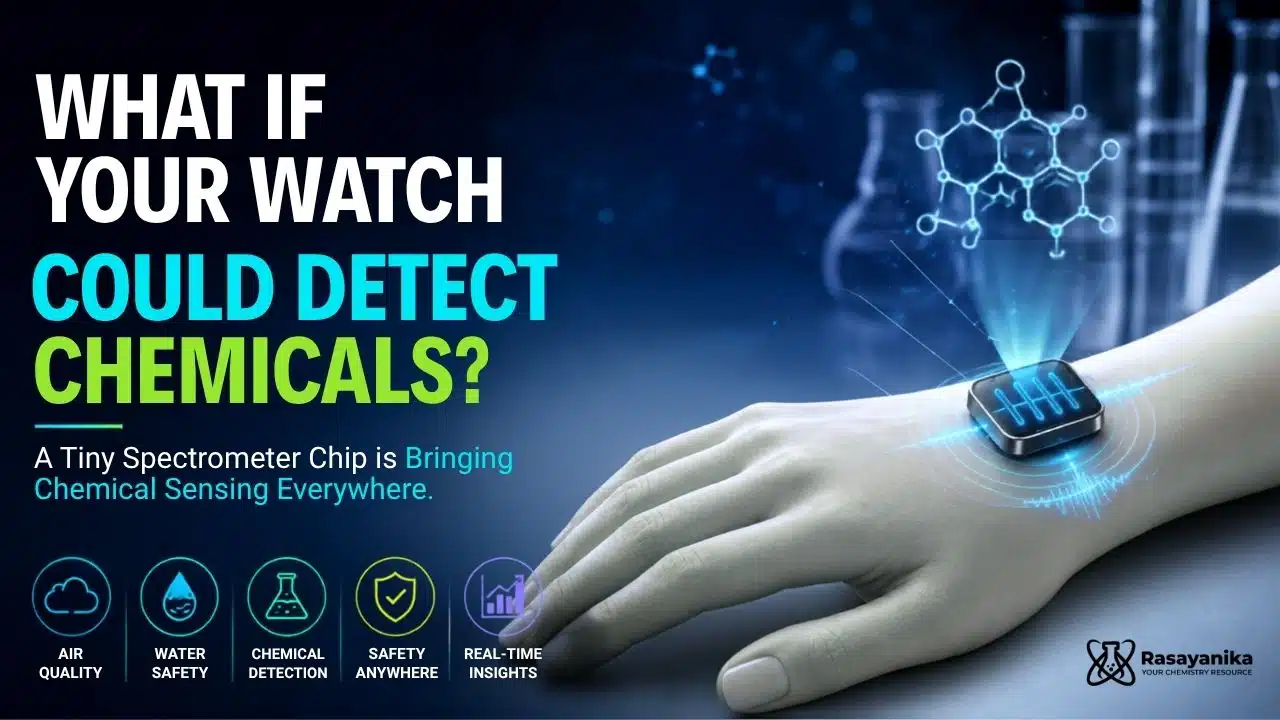
Researchers from the University of Cambridge and GlitterinTech, a startup founded by the same research team, have developed a new Spectrometer Chip that could make advanced chemical sensing more accessible in everyday devices. Their work was published in a peer-reviewed journal, Nature Photonics.
The chip costs approximately $10 and measures a few cm, enabling lab-grade chemical sensors into a small device, such as a watch, suitable for portable electronics and wearables. The chip is built on a photonic substrate composed of silicon nitride (Si₃N₄) and operates in the near-infrared spectrum ranging from 1200 to 1700 nm. This integrates a network of optical components such as unbalanced Mach–Zehnder interferometers and micro-ring resonators.
Together, these structures shape how incoming light is processed and converted into spectral information on the chip itself.
Spectrometers have many applications for the identification and analysis of chemicals in various fields, including manufacturing, health sciences, food testing/quality control, and environmental monitoring. The historical trend toward smaller spectroscopic instruments has incurred a penalty that impacts spectral resolution, accuracy, and sensitivity; according to the researchers at Purdue University, the improvements to their new spectrometer will result in superior analytical performance than previously achieved in other microspectrometers.
The system is fundamentally different from conventional spectrometers, which typically rely on dispersive optical elements or computational reconstruction methods to analyze light. At the core of the chip is a very different way of handling light signals. Instead of relying on heavy computational reconstruction, the device effectively performs a form of circular convolution directly in the optical domain. The resulting signal can then be reconstructed using Fast Fourier Transform (FFT) methods, making the process faster and less computationally demanding than traditional spectrometers that depend on iterative optimization algorithms.
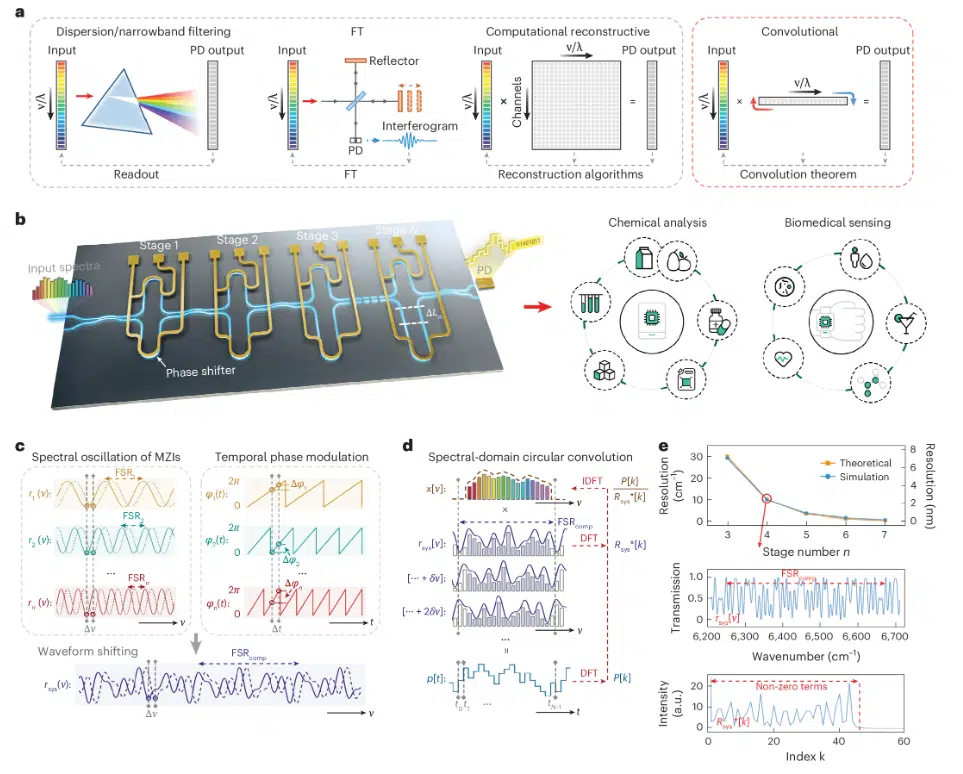
The team tested the Spectrometer Chip across several practical applications. In material and food analysis, it successfully identified plastics, pharmaceuticals, coffee, flour, and tea with a reported 100% success rate. It also measured concentrations in water-based and organic solutions with an accuracy of around 0.01%, outperforming commercial benchtop spectrometers used for similar tasks.
The researchers demonstrated how this technology can be used in healthcare applications using near-infrared diffuse reflectance spectroscopy. For biomedical applications, the system uses near-infrared diffuse reflectance spectroscopy to pick up subtle optical signals from the body. These signals can be linked to markers such as glucose, lactate, blood alcohol levels, and hydration. Because the measurements are taken through the skin, the approach is non-invasive and could eventually support wearable health-monitoring devices.
Another benefit of the Spectrometer Chip is that it is very durable. During testing, it remained stable from -20 degrees Celsius to +80 degrees Celsius. This degree of reliability is crucial for wearable devices, industrial settings and outdoor environments due to the extreme variability of temperature in these applications.
Researchers speculate that this technology has the potential to extend the application of spectroscopy into the home, making everyday items spectrally observable. Spectroscopic applications may include: real-time food quality monitoring, industrial process control, environmental sensing, hydration tracking, and future integrated health-monitoring systems.
The Spectrometer Chip has the potential to help further develop low-cost device technologies by providing a path to deliver high-quality chemical analysis. As Photonic Technologies continue to advance, the Spectrometer Chip may provide higher-quality Chemical Sensing capabilities in more affordable and compact-sized devices, enabling Chemical Sensing to become as common and easy to use as Digital Sensors used in every other application available today.