




























Researchers Redesign a Hidden Bacterial Enzyme Into a Green Catalyst
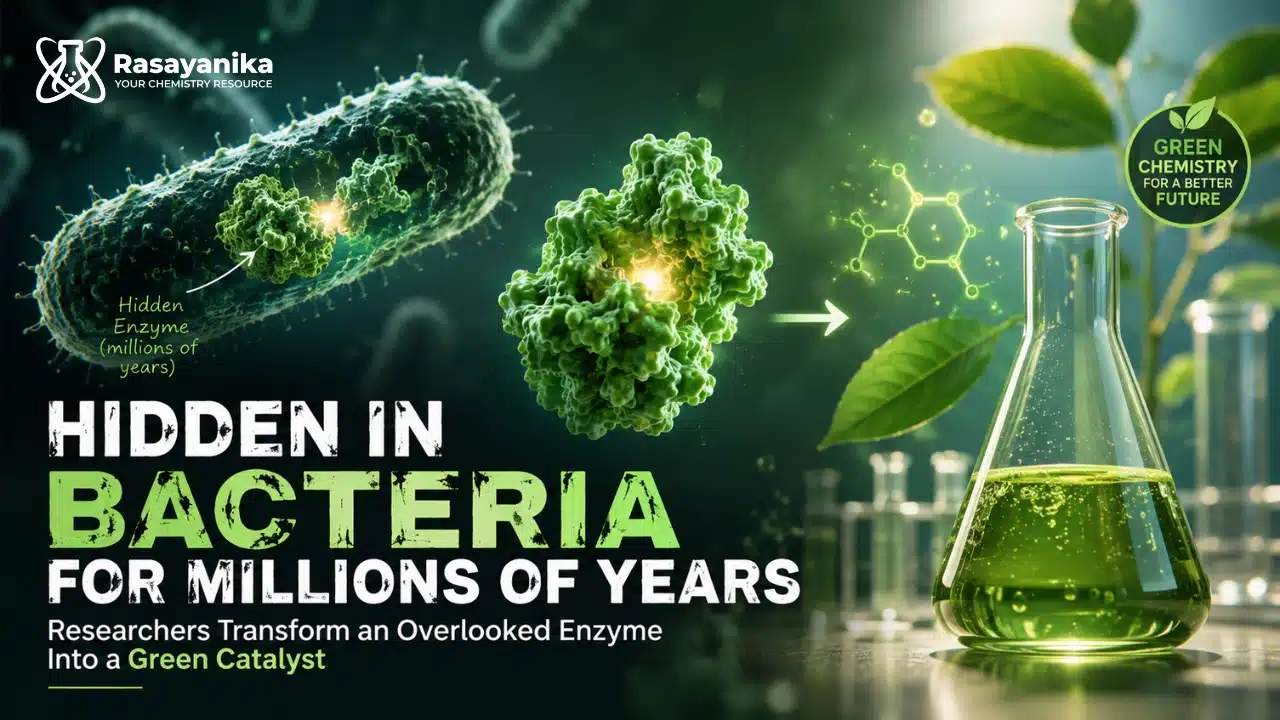
For decades, scientists have studied Bacillus subtilis, one of the best-known bacterial species in microbiology. Yet hidden within its genetic blueprint was an enzyme that refused to reveal its secrets. Known as CYP107J1, this molecular catalyst remained largely unexplored because researchers could not identify the partner proteins needed to activate it.
Now, a team of scientists has found a way around that obstacle. By redesigning the elusive enzyme into a more efficient green catalyst, they have uncovered new insights into its function while demonstrating a strategy that could help make oxidation chemistry more sustainable.
Industrial oxidation reactions are essential for producing pharmaceuticals, dyes, and speciality chemicals, accounting for nearly one-third of all chemical industrial processes. However, conventional oxidation methods often require high temperatures, high pressures, and toxic oxidising agents.
A research team led by Professor Toshiki Furuya of the Department of Applied Biological Science, Faculty of Science and Technology, Tokyo University of Science (TUS), in collaboration with researchers from TUS and the University of Adelaide, successfully engineered CYP107J1 into a hydrogen peroxide-driven catalyst.
P450 monooxygenases, or “P450 enzymes,” catalyze selective oxidation reactions and are broadly distributed in nature; however, most of them have not yet been fully characterised because they utilise associated partner proteins, called reductases, to transfer electrons and activate the enzyme’s oxidation catalysis.
CYP107J1 is a type of cytochrome P450 enzyme identified in Bacillus subtilis, a popular model organism among microbiologists; however, no clear characterisation has been published about its function. The primary obstacle to functional studies of CYP107J1 was the lack of an appropriate electron-donor protein; therefore, it was not possible to assess enzyme activity. To address this issue, researchers used a rational design strategy to modify the enzyme’s active site, thereby enabling the peroxide shunt pathway and converting CYP107J1 from a monooxygenase into a hydrogen peroxide-driven peroxygenase that no longer requires conventional redox partner proteins.
This converted CYP107J1 into a hydrogen peroxide-driven peroxygenase, eliminating the need for conventional redox partner proteins. Structural and mutational insights from previous studies on the related cytochrome P450 enzyme CYP199A4 were used to guide amino acid substitutions, enabling structural modeling to identify corresponding positions in CYP107J1 that could confer peroxygenase activity.
In engineering the enzymes, the team first showed that native CYP107J1 could oxidize 4-alkylbenzoic acids when expressed in E. coli together with substitute redox partner proteins. The native CYP107J1 enzyme showed relatively low catalytic activity when paired with substitute redox partner proteins in E. coli, reflecting the absence of its natural electron-transfer partners.
With respect to engineered CYP107J1, the data showed that the modified enzyme exhibited a 28-fold increase in catalytic activity for 4-hexylbenzoic acid compared to the unmodified enzyme in the presence of alternate redox partners; however, the regioselectivity of the engineered CYP107J1 was preserved (i.e., it introduced the hydroxyl group at the same position on the substrate).
The researchers also discovered an unanticipated ability of the redesigned enzyme. Engineered CYP107J1 was able to convert indole to indigo, a commercially significant blue dye. Indigo was produced using only the engineered enzyme, hydrogen peroxide, and indole. The rate of indigo production was greater than that reported for other P450 peroxygenases that catalyzed this reaction.
According to Professor Furuya, simplifying the reaction mechanism by utilizing hydrogen peroxide not only provides insight into previously uncharacterized enzymes but also has the potential to increase their utility as catalysts for producing valuable chemical products.
Using CYP107J1 as a case study, this research provides a useful framework for studying the functions of other so-called orphan P450s (where no natural partner has been identified) by converting these to use hydrogen peroxide as a redox partner in catalytic reactions. This approach can help facilitate more rapid exploration of the potential function and potential catalytic functions of these enzymes
This study’s findings could assist in the future development of environmentally friendly catalysts for the synthesis of pharmaceuticals, dyes, and other high-value chemicals under milder and more sustainable conditions. The research team is continuing to investigate methods of improving the catalytic activity of the created enzyme and extending their knowledge of the CYP107J family of enzymes that are present in many Bacillus species.
The enzyme engineering strategies used in this research may play an important role in helping to achieve sustainable oxidation chemistry through the development of cleaner, more efficient production methodologies that are less dependent on traditional oxidation reactions that require harsher operating conditions.