




























Diazo Compounds Finally Uncovered: The ‘Dark Matter’ Hidden in Lung Bacteria
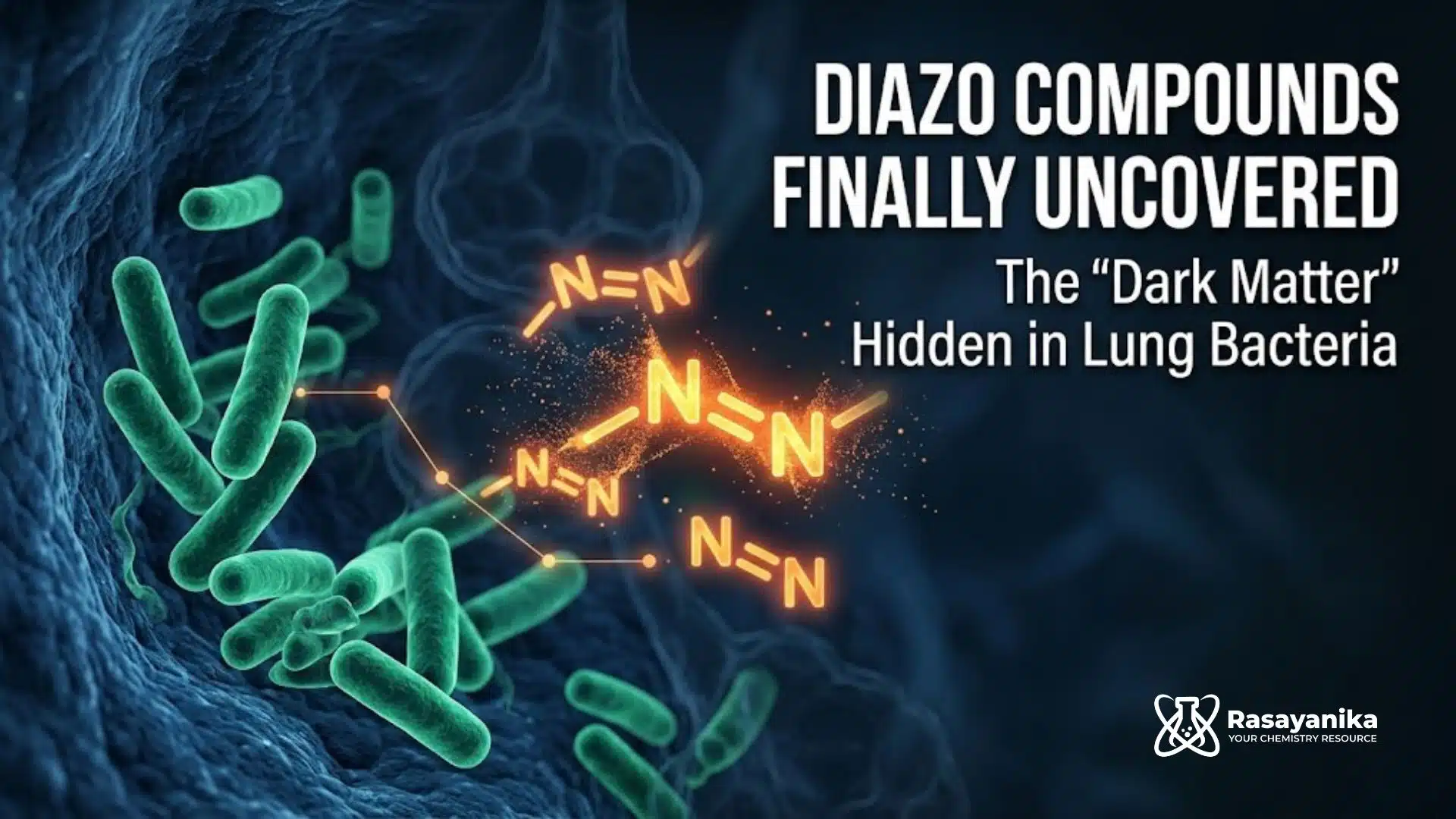
Scientists have now found a way to detect a type of very hard-to-detect chemical compound known as diazo metabolites—and for the first time, in a bacterium that causes lung disease in humans.
Diazo compounds are sometimes called the “dark matter” of chemistry for this reason: They are so hard to detect. Even though these chemicals are known to be powerful in their biological effects, such as anticancer, antibiotic, and antifungal agents, fewer than 30 of these natural compounds have been detected so far. But computer predictions say there are more.
Why haven’t we detected them yet? The main reason is that diazo compounds are very unstable chemicals that can fall apart easily when exposed to heat, light, acids, or even physical disruption. They are also made in very small amounts, making them hard to detect using common methods like mass spectrometry. In addition to this, studying the way these chemicals are made in microbes requires complex and time-consuming genetic experiments.
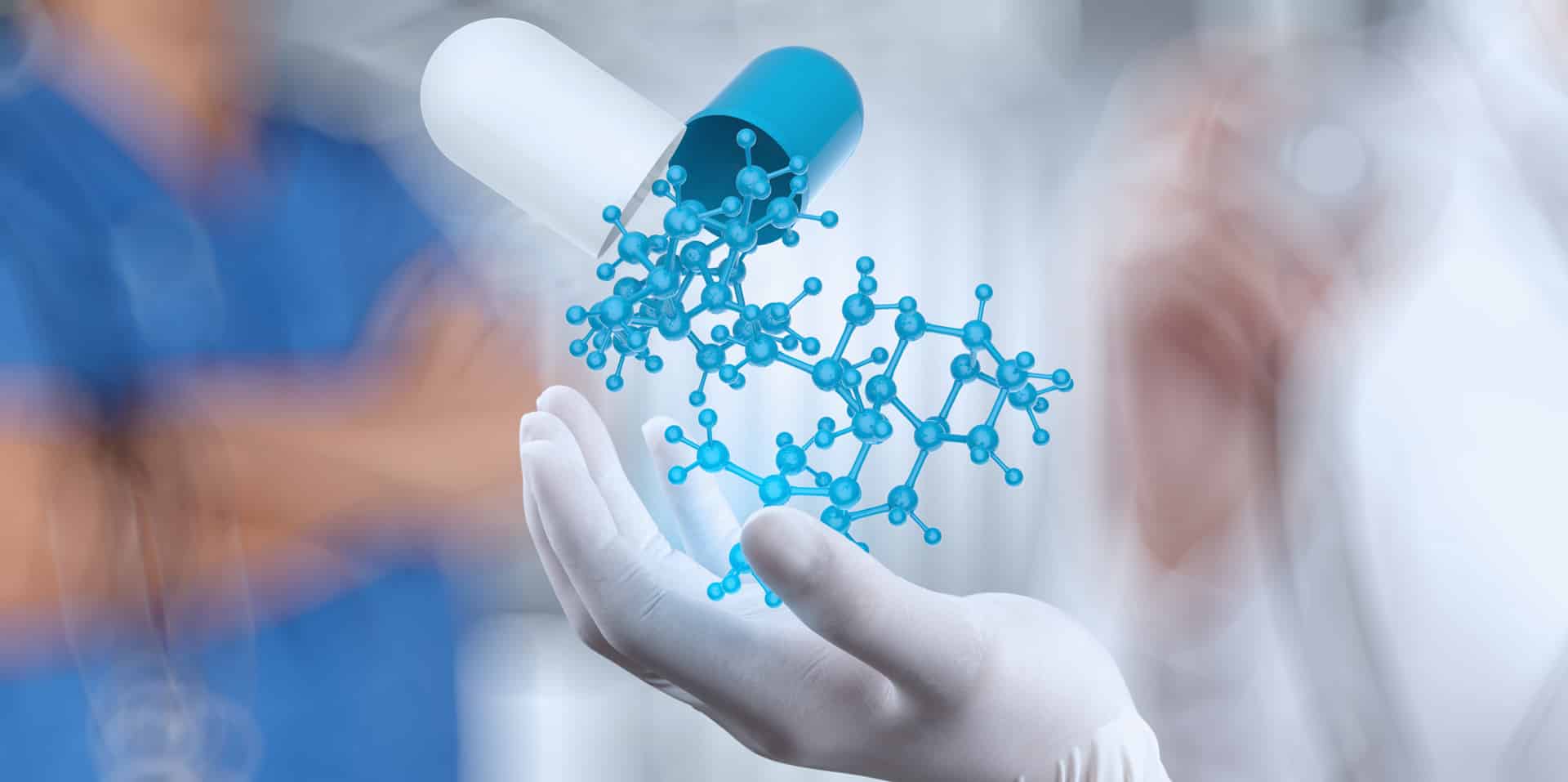
To solve this problem, a research team led by Emily Balskus at Harvard University developed a new and simpler method. Instead of trying to directly detect the unstable diazo compounds, they used a chemical probe—a special molecule that reacts with diazo compounds and “captures” them. This reaction creates more stable products that are much easier to detect using liquid chromatography–mass spectrometry.
To find the right probe, the team tested how a known diazo compound, azaserine, reacts with different chemicals. This led them to identify dibenzocyclooctyne C-6 acid as an effective probe that can trap diazo compounds.
One major advantage of this method is that it does not require genetic modification. It is simple, flexible, and can be used to discover many unknown diazo compounds that would otherwise go unnoticed.
Using this approach, the researchers studied bacterial genomes to look for signs of diazo compound production. They focused on specific gene clusters linked to a rare chemical process called hydrazone N-oxidation. This search led them to a human lung pathogen called Nocardia ninae.
In this bacterium, these scientists were able to discover two new diazo metabolites that had never been known before: 4-diazo-3-oxobutanoic acid and diazoacetone. The diazoacetone is particularly interesting as this chemical is already known to be a useful chemical in organic chemistry.
They also discovered an enzyme known as Dob3 that is very significant in the synthesis of these diazo compounds. This enzyme catalyzes a very rare reaction known as hydrazone oxidation that scientists had predicted before but had never been able to demonstrate in a laboratory setting.
This Dob3 is particularly exciting as this enzyme has the potential to function on various types of chemical substances; hence, this could be a potential biocatalyst that can be used in carrying out various chemical reactions.
Currently, diazo compounds are usually synthesized using dangerous chemicals such as acids or explosive chemicals. The discovery of this enzyme has opened the door for the possibility of synthesizing these chemicals in a more environmentally friendly way. However, this enzyme is still not efficient enough for this synthesis process; hence, scientists are working on its efficiency.
This new process not only allows scientists to discover these newly hidden chemical compounds but also opens doors for a safer drug development, greener chemistry, and a deeper understanding of how these mysterious molecules might affect human health.