

































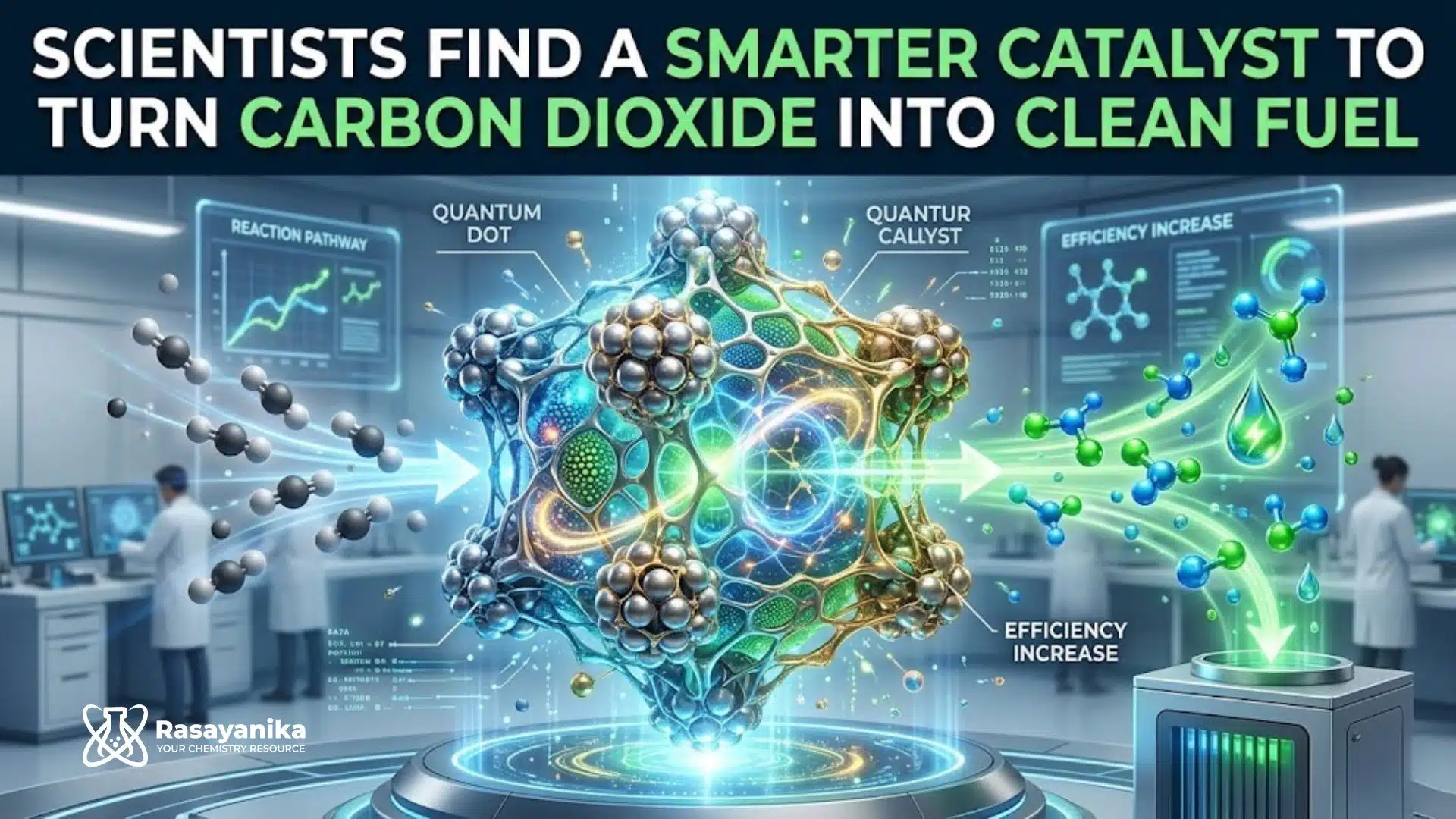
Scientists Find a Smarter Catalyst to Turn Carbon Dioxide Into Clean Fuel
Scientists have found a new way to turn carbon dioxide (CO₂) into useful fuel using a special type of catalyst. This discovery could help make chemical processes cheaper, cleaner, and more efficient.
Every chemical reaction needs some energy to get started. You can think of it like lighting a match—it needs a spark first. In many industries, this starting energy is very high, which makes processes expensive. To solve this, scientists use catalysts. These are substances that help reactions happen more easily by lowering the energy needed.
A research team at ETH Zurich has now created a new catalyst that makes it much easier to produce methanol from carbon dioxide and hydrogen. Methanol is a type of alcohol that is widely used to make fuels, plastics, and many other materials.
What makes this catalyst special is how it uses the metal indium. Instead of grouping many metal atoms together like traditional catalysts, this new design uses single indium atoms. Each atom acts as its own active site, helping the reaction happen. This is a big change from older methods, where many atoms in a group did not actually take part in the reaction.
This new approach makes much better use of the metal, which is important because such materials can be rare and expensive. It also allows scientists to study the reaction more clearly, instead of relying on trial and error as they often did before.
Methanol plays a very important role in chemistry. It is used to produce fuels and materials like plastics. Because of its wide use, it is sometimes called the “Swiss army knife” of chemistry. It is also becoming important in efforts to reduce the use of fossil fuels. If the hydrogen and energy used to make methanol come from renewable sources, the whole process could become climate-friendly.
Another benefit of this method is that it gives a new use to carbon dioxide. Instead of releasing CO₂ into the atmosphere, it can be captured and turned into something useful.
The scientists also developed new methods to place single indium atoms onto a support material called hafnium oxide. One method involves heating the materials at very high temperatures, between 2,000 and 3,000°C, and then cooling them quickly. This helps fix the atoms in place while keeping them active.
The new catalyst is also very strong and stable. It can work under tough conditions, including high temperatures of up to 300°C and pressures up to 50 times higher than normal air pressure. These conditions are needed to produce methanol from CO₂ and hydrogen.
Another advantage of using single atoms is that it helps scientists better understand how reactions work. In older catalysts, many atoms were not involved in the reaction, which made it harder to study what was really happening. With single atoms, the process is clearer and easier to analyze.
The research team has been working on improving methanol production from CO₂ since 2010. They also worked closely with industry and other research groups. According to the researchers, this collaboration played a key role in making this breakthrough possible.