
































Breaking News: Middle East Conflict Disrupts Petrochemicals and Global Trade
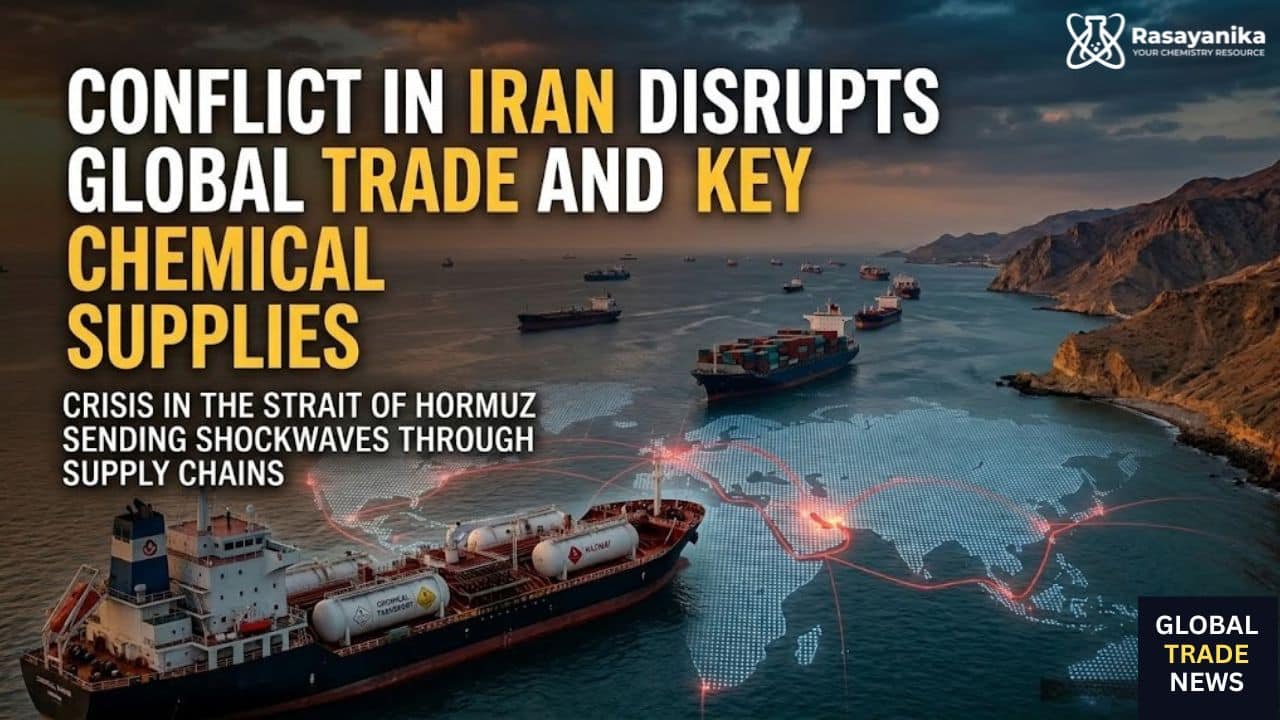
The ongoing conflict involving Iran and a joint offensive by the United States and Israel is beginning to affect global trade in a major way. One of the biggest reasons is the closure of the Strait of Hormuz, a very narrow but extremely important sea route used by ships carrying oil, gas, and other materials.
Because this shipping route is effectively closed, exports from several Gulf countries have stopped. These include Iran, Iraq, Kuwait, Bahrain, Saudi Arabia, the United Arab Emirates, and Qatar. Many ports in these countries are unable to send goods because ships cannot pass safely through the strait.
The biggest impact has been on oil, natural gas, and petrochemical products. Normally, about one-quarter of the world’s seaborne oil and around one-fifth of global liquefied natural gas (LNG) move through the Strait of Hormuz. With shipments halted, oil prices have already jumped.
To reduce the pressure on global supplies, the International Energy Agency has agreed to release millions of barrels of oil from emergency government reserves.
As the fighting continues, several major oil and gas terminals in the Gulf region have shut down. Some countries have also reduced their production of oil, gas, and chemicals. In some cases, this is because facilities were attacked. In other cases, storage tanks are already full since ships are not available to transport cargo. Oil depots inside Iran have also been hit by strikes from the US and Israel.
A sudden stop in Middle Eastern supplies could cause shortages of certain raw materials, especially in Europe and Asia. These regions depend heavily on the Middle East for petrochemical feedstocks such as naphtha. In fact, more than half of the naphtha used by petrochemical plants in these regions usually comes from the Middle East.
However, global petrochemical production has had excess capacity for some time. Because prices have been low, producers in other regions may not increase production unless prices rise enough to make it worthwhile.
The disruption is also affecting materials that are produced as byproducts of oil and gas processing. One major concern is helium. Around one-third of the world’s helium supply has been cut off. Qatar is home to one of only two facilities that produce the high-grade helium used in semiconductor manufacturing.
If the conflict continues for more than two weeks, or if helium plants are damaged, global supply chains could face serious disruption. Recovering from such damage could take months or even years.
Another important material affected is sulfur. Gulf countries produce about 44% of the world’s elemental sulfur, which comes from refining sulfur-rich crude oil. Some refineries in other parts of the world have sulfur available, but transporting it has become difficult. Many ships are stuck on either side of the Strait of Hormuz, and shipping companies are unsure whether they will have enough fuel for long voyages.
Lower sulfur supplies could affect the production of sulfuric acid, which is widely used in metal refining and semiconductor manufacturing. Sulfur is also critical for fertilisers, which account for about 60% of global sulfur demand.
The Gulf shutdown has also disrupted exports of nitrogen fertilisers such as urea and ammonia. This could create serious supply problems, especially as the Northern Hemisphere is entering the spring season when fertiliser demand is at its highest.
How severe these disruptions become will depend on how long the conflict continues and whether more energy and production facilities are targeted.
While former US President Donald Trump has said the war is “very complete,” the Islamic Revolutionary Guard Corps in Iran says it will decide when the conflict ends. The group has also said the blockade on exports will continue as long as attacks by the US and Israel persist.