




























Revolutionizing Ammonia Synthesis: How MOF–NP Catalysts Are Transforming Nitrogen Chemistry
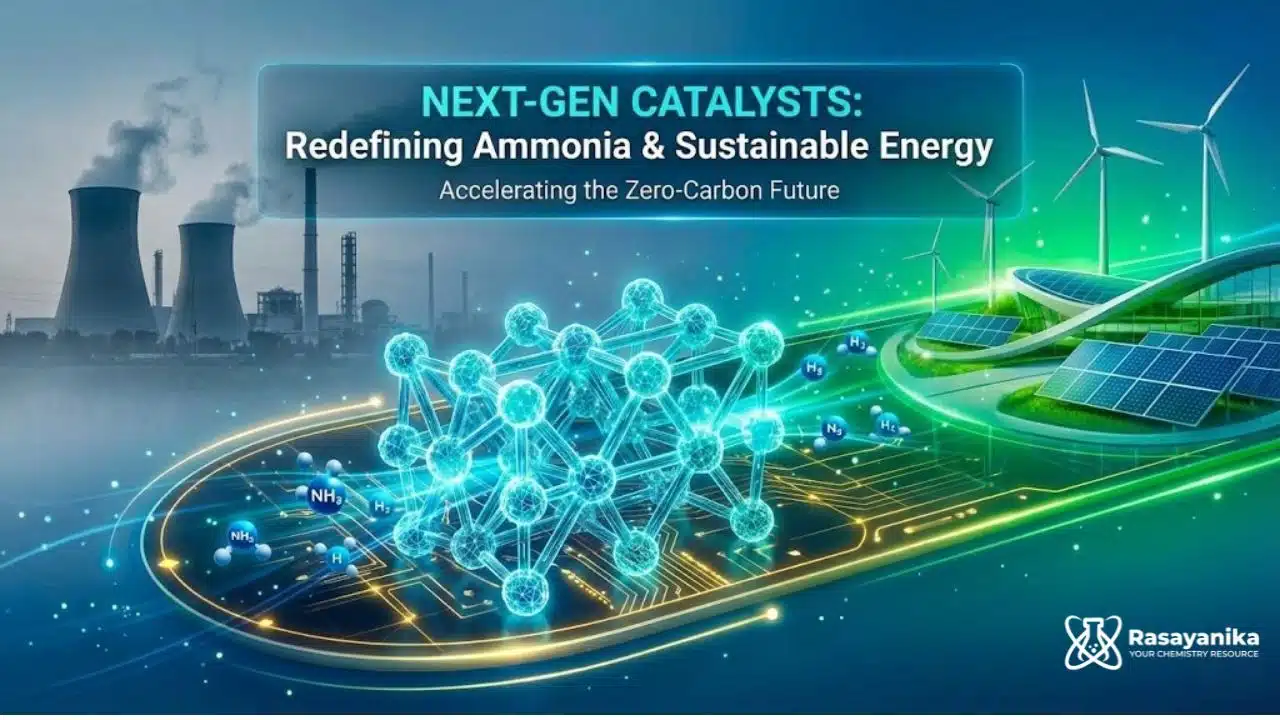
Do you know that we can turn even the most energy-intensive industrial processes into an eco-friendly, clean, and efficient method for ammonia synthesis? It is all because of a new breakthrough in nitrogen chemistry that scientists now can use tiny sponge-like particles called metal-organic frameworks, which are combined with nanoparticles, to revolutionize the synthesis of ammonia. Due to this discovery, the industrial carbon emissions will be cut, nitrate-polluted water will be cleaned, and power a new generation of sustainable energy solutions.
Over a century, the global nitrogen conversion has been dominated by the Haber Bosch process, which is fundamental to modern agriculture because it produces ammonia that fuels the fertilizers worldwide. However, it is more energy-intensive and operates under high temperatures and pressures, using a vast amount of fossil fuels, and contributes heavy carbon dioxide emissions. Meanwhile, the nitrate pollution from fertilizers and industrial waste harms the water systems, causing serious environmental issues. As scientists explore a cleaner and more environmentally friendly way of ammonia synthesis, the demand for more efficient and environmentally friendly nitrogen technologies will also increase.
Researchers from Sungkyunkwan University, Yangzhou University, Tsinghua University, and its affiliated institutions have found a potential strategy that focuses on a hybrid metal–organic framework–nanoparticle (MOF–NP) catalysts, which potentially can improve ammonia synthesis and other aspects of nitrogen chemistry, and are the subject of their November 2025 paper published in eScience.
These innovative catalysts combine nanoscale metal particles with very porous MOFs. Although conventional MOFs are good at trapping molecules, their efficacy in chemical processes is limited by their low electrical conductivity. The researchers have developed highly active and long-lasting materials by incorporating nanoparticles into the MOFs. This method gets beyond the drawbacks of traditional electrocatalysts, such as weak conductivity and unwanted side reactions.
By increasing nitrogen adsorption, stabilizing reaction intermediates, and inhibiting competing processes like hydrogen evolution, catalysts incorporating gold, palladium, copper alloys, ruthenium, or molybdenum disulfide nanoparticles significantly improve ammonia synthesis. These characteristics increase the efficiency and ammonia production under ambient circumstances.
Additionally, the hybrid catalysts show exceptional effectiveness in lowering nitrate pollution. For instance, palladium nanodots in conductive MOFs based on copper and zirconium produce high nitrate conversion rates with extraordinarily selectivity. Because of their porous architecture, which facilitates rapid electron and proton transfer, hazardous nitrates can be transformed into useful ammonia for fertilizer or energy purposes.
In summary, these MOF-NP catalysts offer a more effective and sustainable path for ammonia synthesis, nitrate remediation, and energy production, marking a major advancement in nitrogen chemistry. These materials could lessen dependency on the energy-intensive Haber-Bosch process while encouraging more environmentally friendly agriculture and carbon-free energy sources with further developments in scale synthesis, sophisticated characterisation, and design using AI.