
































Chemical Companies in India are Shifting towards Batteries and Semiconductors
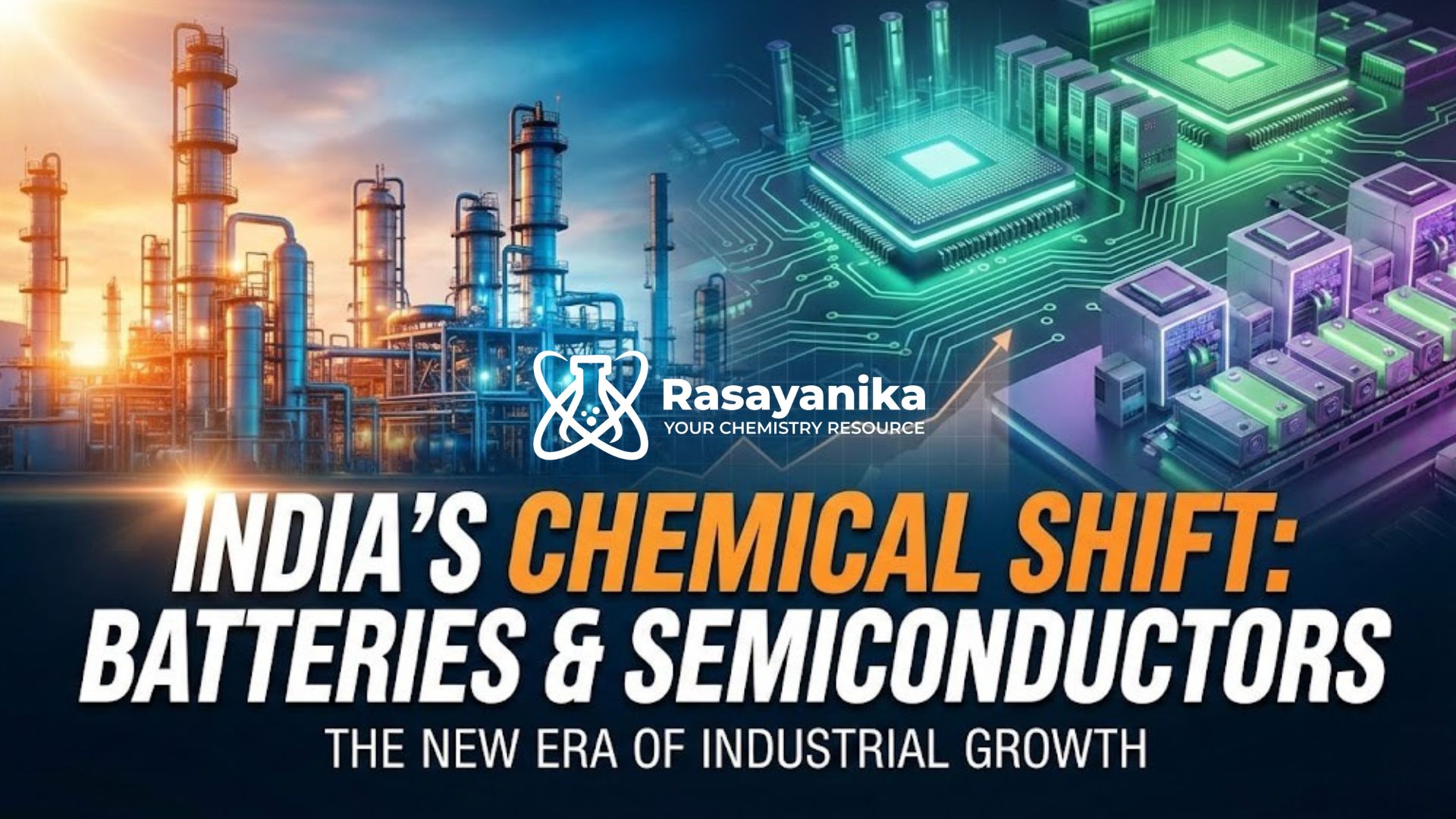
As we can observe a substantial increase in the chemical industry, we can observe that traditional methods are being replaced by modern methodologies. As the country is accelerating its manufacturing fields, we can see that more and more electrification and semiconductor manufacturing are at the forefront.
Definitely, electric vehicles are making a huge impact on the development of numerous vehicle batteries. Alongside, there is a parallel rise in the development of semiconductor devices.
As the government is helping in boosting the adoption of electric vehicles, there are several schemes that are helping people from all backgrounds. These schemes, such as Production Linked Incentive (PLI) and PM e-Drive programmes, have helped in the reduction of GST rate as well as improved the affordability for the common man. With the government aiming for electric vehicles to account for 30% of total passenger vehicle sales by FY30, demand across the battery ecosystem is rising sharply.
So the substantial increase in electric vehicles is paving the way to increase the production of Lithium-ion batteries, which are the major in-demand batteries in India. The growth trajectory aligns with India’s broader goal of meeting 50% of its energy requirements from renewable sources by 2030.
When most of the population is switching towards eco-friendly vehicles, the consumption is getting stronger. This can also reduce the export of batteries as the demand is high within the country. This could eventually lead to localizing the upstream components as well as raw materials.
Multiple chemical companies are shifting and increasing their value chain in battery manufacturing. The main focus here is to develop high-purity battery-grade materials and have high technical precision in the development of batteries.
Indian Chemical Companies, such as PCBL Chemicals, were originally manufacturing carbon black used in tyres. They also had huge industrial applications. Now, they are extending the expertise into conductive battery materials. The company is developing superconducting carbon, nano-silicon, and acetylene black, with nano-silicon offering significantly higher theoretical energy density than graphite. Its pilot facility, developed through a joint venture with Australia’s Kindia Pty, is expected to be operational by late 2025, with commercialisation planned for FY27–28. A dedicated acetylene black plant with an annual capacity of 4,000 tonnes is also scheduled for commissioning in FY27.
Neogen Chemicals is building an integrated battery chemicals facility in Gujarat. This is primarily helping in supplying high-purity electrolytes and related salts. They have a major partnership with Japan’s MU Ionic. Through this, the company is positioning itself as a domestic supplier of advanced electrolyte materials critical for battery safety and performance.
Balaji Amines has entered the specialty solvent segment by upgrading its production lines for electronic-grade dimethyl carbonate, a key electrolyte component. Its facility, commissioned in May 2025, makes it the only Indian manufacturer of this product.
Beyond batteries, semiconductor manufacturing is emerging as a parallel growth driver. Chip fabrication depends heavily on ultra-pure chemicals, specialty gases, and process materials, creating space for chemical companies with strong technical capabilities.
Acutaas Chemicals was known to develop pharmaceutical intermediates. Now they have slowly shifted towards expanding the battery electrolyte additives as well as semiconductor chemicals such as vinylene carbonate and fluoroethylene carbonate. Through a joint venture with South Korea’s J & Materials, the company has also become the only Indian producer of semiconductor-grade photoresist chemicals, with commercial production and exports expected to contribute to revenues from FY27.
Archean Chemicals is venturing into compound semiconductors through a silicon carbide fabrication facility. This was developed in collaboration with the UK-based Clas-SiC Wafer Fab. They are still under construction and are designed to produce wafers and packaged units for electric vehicles and renewable energy applications.
Meanwhile, Stallion India Fluorochemicals is moving towards building strong products in ultra-high purity gases. Here, the company is primarily targeting the development of semiconductor applications where stringent quality standards are critical.
These actions collectively indicate that Indian Chemical Companies are shifting towards eco-friendly development. And also, there are more extensive transformations in India’s chemical sector, as companies entrench themselves further in strategic, technology-oriented value chains that underpin the nation’s long-term aspirations for clean energy and advanced manufacturing.