































Chemistry Research by UCLA Scientist Discovered a Better Way for Plastic Production
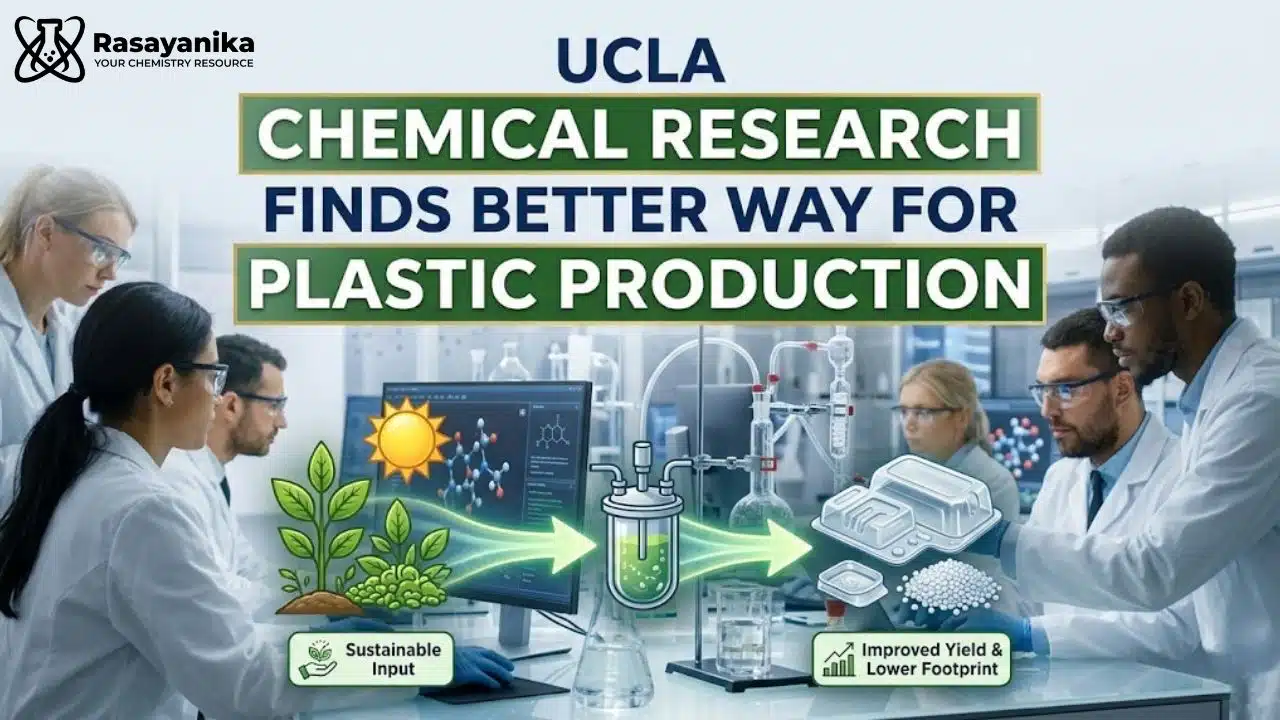
Scientists at UCLA have found a new way of plastic production by making an important plastic ingredient more efficiently and with less energy.
Scientists at UCLA have found a new way to improve plastic production by making an important material more efficiently and with less energy. This breakthrough could help the plastic industry lower costs and reduce energy use.
The research, part of ongoing chemistry research, was led by Professor Philippe Sautet, who works in both chemistry and engineering at UCLA. His team studied how to better turn propane gas into propene, a key material widely used in the plastic industry. Propene is the second most produced plastic ingredient in the world, after ethylene, making it very important for global plastic production.
This chemistry research focuses on improving how essential materials are made for everyday products. Propene is used to make polypropylene, a strong and lightweight plastic found in items like food containers and storage boxes. However, the usual ways of producing propene are not very efficient. They require very high temperatures or expensive materials, and they often create unwanted byproducts.
At present, most propene is made using processes called steam cracking and fluid catalytic cracking. These methods heat materials to over 800°C to break them into smaller parts. While effective, they use a large amount of energy and produce a mix of chemicals.
Another method, called propane dehydrogenation, works at a lower temperature of about 600°C. It can produce propene along with high-purity hydrogen. However, this method depends on platinum catalysts, which are expensive. Over time, these catalysts get covered with carbon deposits, a problem known as “coking,” which reduces efficiency and requires regular cleaning.
To solve these issues, the UCLA team used computer simulations as part of their chemistry research to test new types of catalysts. They studied materials called single-atom alloys, made by adding small amounts of metals like hafnium or iridium to copper.
Their findings showed that these new catalysts can perform better than platinum. They can increase the amount of propene produced while using less energy and reducing carbon buildup, which is important for improving plastic production.
In these materials, single atoms of hafnium or iridium are spread across a copper surface. This allows better control of the reaction. According to Sautet, there is just enough active metal to carry out the reaction without creating extra waste.
The team found that these isolated atoms are more effective at breaking chemical bonds in propane. This helps produce propene more efficiently, supporting the needs of the plastic industry.
However, the results are based on computer models, and testing in real world is still needed. Scientists must confirm whether this method can be used on a large industrial scale.











You made some good points there. I looked on the internet for the subject and found most people will agree with your blog.