





























Table of Contents
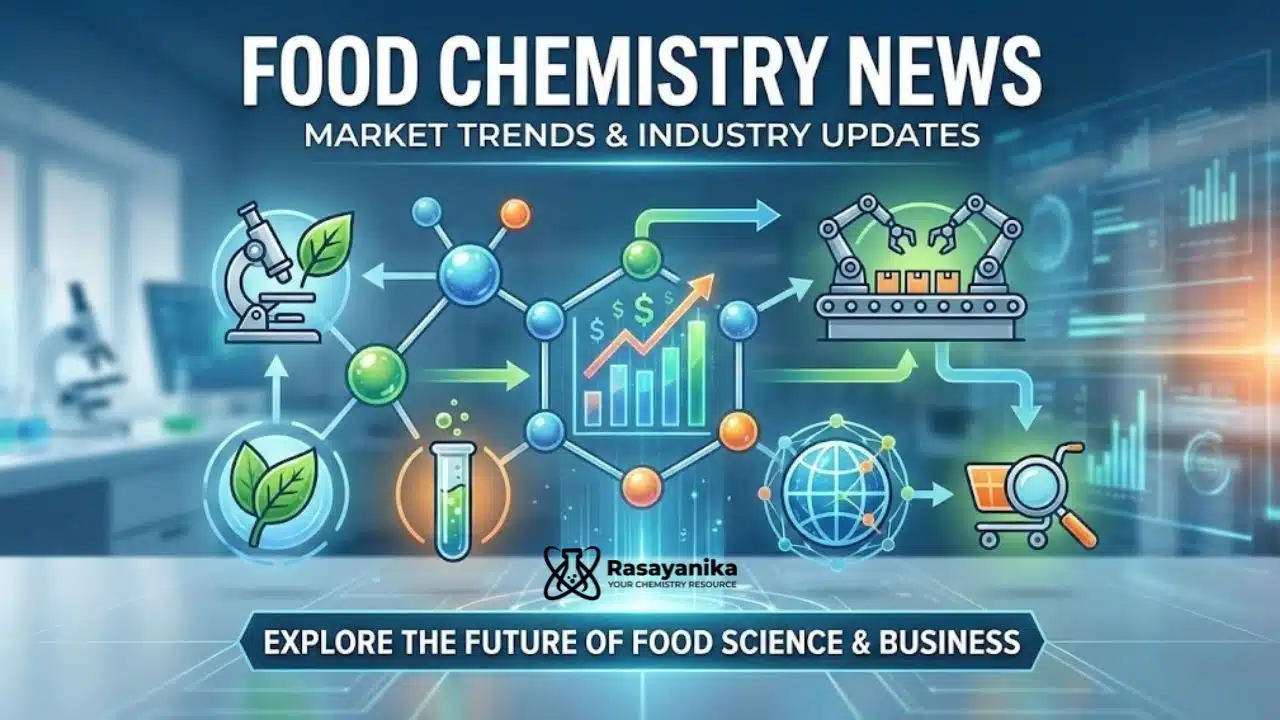
Food Chemistry News, Market Trends & Industry Updates
Food is the primary source of Energy for all living beings! And I am sure most of you are foodies like me. And when we consume our favourite food, whether it is the junk food most people love or the fresh fruits that we are supposed to love, it completely matters and shapes our bodies as well as our minds. What we eat is what we become!
With the modernisation and transformation happening in the food industry, we must all be highly cautious about what we consume and be mindful. Most companies are manufacturing food right according to the consumers’ needs and are entirely transforming the food industry. The scientific innovations are driving the global market at an unimaginable pace, and we can observe the evolution and drastic changes occurring in the Food Industry.
Here, food chemistry plays an important role in helping people understand and explain the necessary information related to food. It can be from the composition of food to the sustainable form of growing all over the world. This article helps you understand areas related to Food Chemistry, including how it is making a significant impact, highlighting breakthroughs, global analytical marketing strategies, as well as the regulatory developments and standards that the food industry must comply with.
What is Food Chemistry and Why Does It Matter?
Food Chemistry can be termed a part of chemistry that helps explore the molecular composition of food and the science behind the manufacture of food products, as well as how these are processed, stored, and chemically altered after cooking.
It not only provides insights into the macronutrients and micronutrients present in the food but also helps in understanding the flavour, nutrition, and safety of food consumption.
One should understand how food chemistry matters. To know that, let us first understand the different macro and micro nutrients present in our food.
- Proteins: they are the primary building blocks of our body. As they are highly essential for the body, one should understand the thorough chemistry behind protein compositions in food. They affect th texture, nutritional quality, as well as the digestibility inside the body. The best example is milk. One can easily understand when milk is spoiled. This is due to the denaturation of casein. As we all know, casein is th protein present in milk.
- Carbohydrates: they are the main source of energy in th cells. And carbohydrates play a vital role in providing sweetness, texture, and energy value to the food.
- Fats and Lipids: they are the main players when it comes to influencing the flavour as well as stability of food products.
- Enzymes: they are the major biocatalysts, and they influence important biochemical processes such as ripening, fermentation, and spoilage.
When we understand in detail the above components of food, one can easily manufacture food according to the right nutrition, as well as develop safe and tasty food products.
And Food chemistry is not something beyond comprehension. Chemistry surrounds us in disguise. We are supposed to decode the language to understand better. If we observe, the famous Milliard’s reaction is responsible for the baking of food as well as the roasting of coffee, which gives us the most soothing effect after a long day. This reaction is one of the fundamental chemical processes studied in food chemistry. And if we delve deeper into the analytical chemistry techniques, one can easily understand and monitor the component smooch easily, therefore, ensuring the food quality precisely.
Modern analytical techniques, including high-performance liquid chromatography (HPLC), nuclear magnetic resonance (NMR), gas chromatography (GC), and mass spectrometry, help in ensuring the quality of food according to regulatory guidelines.
Food chemists bridge the gap between laboratory research and industrial application, enabling the development of safe, nutritious, and appealing foods.
Recent Breakthroughs in Food Chemistry Research
When it comes to innovations, Food chemists are known to develop many innovative breakthroughs in the industry.
1. Natural and Clean-Label Ingredients
According to recent trends, people prefer food products that do not contain any artificial flavours or added preservatives. As the population is becoming more and more jhelah conscious, th responsibilities of food chemists are known to increase.
In recent studies, researchers have explored essential products from plant extracts and essential oils. This type of natural product helps in preserving the freshness of food and also provides antimicrobial and antioxidant properties. Thereby increasing the shelf life and protecting the food quality.
2. Functional Foods and Bioactive Compounds
As we can observe that the food market is expanding drastically, the primary focus is being given to the nutritional food products. Here we can observe that the probiotics, prebiotics, and the omega-3 fatty acids are being targeted to manufacture more, according to the trends. Various other food products that have a higher quantity of polyphenols and carotenoids are also being targeted as per the trending demands.
Scientists focus on maintaining the stability and bioavailability of these compounds during processing, storage, and digestion.
3. Plant-Based Proteins and Alternative Ingredients
We observe a significant shift towards plant-based dietary products. Hence, numerous researchers are working on examining such chemical compositions, protein digestibility, and lab-grown proteins. Multiple researchers are trying to find the perfect ingredients for obtaining ingredients that provide th perfect texture, taste, as well as high nutritional values.
4. Novel Processing Techniques
Advanced technologies such as high-pressure processing (HPP), pulsed electric fields (PEF), cold plasma, and ultrasound-assisted extraction are considered as a few of the novel processing techniques. They are mainly ensuring the preservation of nutrients in food products. They aim towards maintaining organoleptic qualities and thereby reducing the hazardous chemical effects on the environment.
5. Smart Packaging Innovations
We should evolve with technological advancements, and that is how we can achieve smart packaging as well. One can observe that there is an increased use of oxygen scavengers in packaging processes. Apart from this, we can also see that various antimicrobial films and biodegradable materials are being used in packaging, which is not only good for consumers but also helps the environment. They are directly affecting the shelf life of food products and help reduce the waste.
One must understand that only with the help of Food Chemistry can one understand interactions between packaging materials and food chemicals. And with the recent research revolutionizing the way we understand and develop food products. Some of the most impactful trends include:
Regulatory Landscape and Industry Updates
Compliance with food safety regulations is crucial to protect consumers and maintain market access. Regulatory agencies worldwide are increasingly focused on chemical safety, labelling, and novel food ingredients.
Global Regulatory Agencies
- FDA (USA): The FDA is known to focus mainly on food additives and ensure the safety of food. They keep a check on those allergens, the amount of additives present in a food, and maintain accurate labeling of food.
- EFSA (Europe): EFSA is known for its evaluation of food contaminants. They focus on the kinds of components of food and safety as well.
- FSSAI (India): FSSAI is the Indian food safety organization. They are compelled to set standards on the composition of food. They also provide safety standards regarding the additives, preservatives, contaminants, and functional ingredients that are present in the food.
Understanding the Trends and Innovations
This article gives a detailed overview of the Food Chemistry developments, market trends, and industry updates. It also helps in providing insights into these areas and how they are rapidly escalating in their own fields.
Advanced technologies in science and innovation are redefining the food industry and propelling th reproduction of desired food products. Similarly, global market forces are still affecting how a particular product is designed as well as how companies will respond to consumers.
Meanwhile, the changing regulations are tailoring the practices for safety, labelling, and regulatory compliance in various regions. Therefore, it is necessary to comprehend such policies in order to move through being compliant and, at the same time, being inventive.
Innovations Fueling Food Chemistry’s Future
A dynamic future for food chemistry is being created by the convergence of research, technology, and consumer trends:
1. Predictive analytics and artificial intelligence
AI is increasingly being utilized in food research to predict chemical interactions, improve formulations, and expedite quality testing. The rapid analysis of flavor characteristics, shelf life, and ingredient stability made feasible by machine learning techniques reduces trial-and-error cycles.
2. Personalized Nutrition
Advances in metabolomics and nutrigenomics enable dietary customisation based on individual health profiles. Food chemistry is used to create targeted functional foods that maximize health benefits at the molecular level.
3. Discovery of Novel Ingredients
Research on bioactive compounds from plants, fungi, and bacteria is still ongoing. These advancements aim to maintain clean-label and sustainable growth while enhancing functional attributes, flavour, and nutrition.
4. Reducing Chemical Dependency
Researchers are innovating ways to extract and preserve food without using chemical ingredients. They are innovating various processes to reduce the usage of food chemicals and increase the consumption of natural products.
The Role of Food Chemists in Industry Transformation
By fusing scientific knowledge with practical applications, food chemists can indeed be termed as important innovators. Creating new formulas and enhancing current items are among their primary duties. Of which few are mentioned below;
- The main goal is to investigate bioactive substances and functional additives.
- Ensuring that they adhere to quality and safety standards.
- Improving the nutritional content, flavour, texture, and stability of the food.
Emerging Areas of Research in Food Chemistry
To make this article more comprehensive, let’s also explore emerging research areas:
1. Food Flavour Chemistry
This is a branch of chemistry that deals with understanding molecular flavour compounds. They are highly essential for manufacturing compounds which are appealing in nature and are likable. The primary research is to enhance the taste and flavour of food.
2. Nutrient Bioavailability and Stability
Researchers study how nutrients are absorbed and metabolized. They also study in detail the encapsulation techniques, enzyme stabilization, and pH optimization. All these will indeed help in maximizing the nutritional benefits of food products.
3. Food Waste Valorization
Innovative approaches convert by-products and waste into functional ingredients. Examples include extracting polyphenols from fruit peels or proteins from industrial by-products.
4. Microbiome-Focused Foods
Gut health is one of the major research topics these days. And food chemists are ensuring that food has a positive influence on gut health. This is one of the highly interesting research and studies occurring under this section on probiotic fibres and symbiotic formulations.
Food Chemistry represents an area of interest that overlaps with science, industry, and consumers. With knowledge of molecular interactions, market trends, and regulatory requirements, food chemists and industry experts are able to produce safer, healthier, and innovative foods.
The linked world of news in food chemistry, market trends, and updates in this industry provides a wide range of understanding related to advancements and their resultant paths in this domain. Alongside articles related to clusters, this news falls under this category in order to present a wide and in-depth range of insights into this area related to food science.