






























Human-made Chemicals Alter the Oceans Everywhere
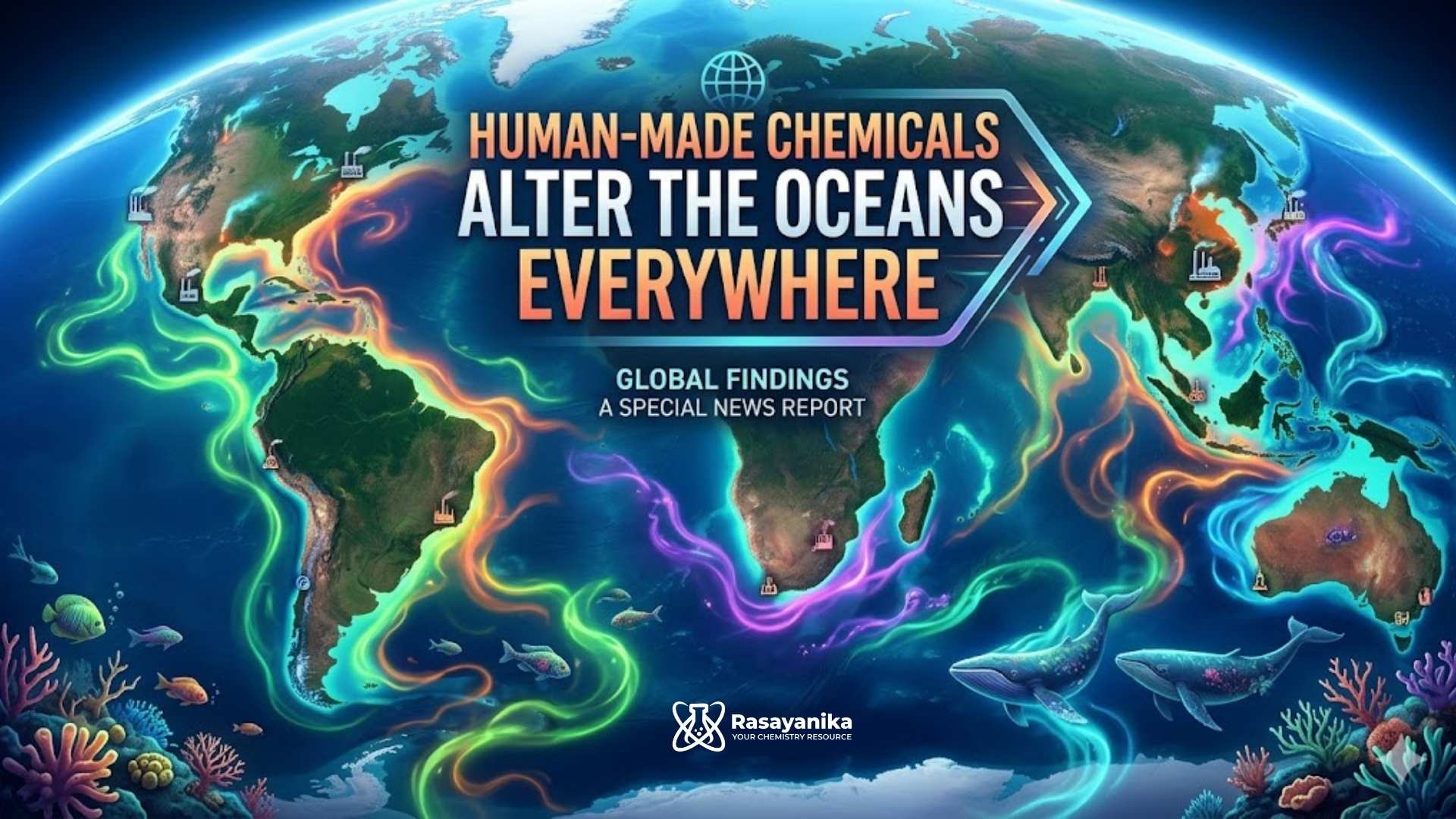
The human effect on the oceans is obvious in the floating plastic, oil slicks, and warmer waters. Yet there is also the less obvious effect of human-made chemicals that are now a large portion of the ocean’s organic matter, particularly near the coasts. Organic matter is the food supply of tiny sea creatures and plays a role in the global carbon balance.
Data from 10 Years of Ocean Chemical Analysis
Scientists from the University of California at Riverside studied over 2,300 seawater samples from more than 20 studies from the Pacific, Atlantic, and Indian Oceans.
“For decades, we’ve known about the surface plastic and the increase in ocean temperatures due to global climate change,” explained University of California at Riverside assistant professor of biochemistry Daniel Petras. “But the buildup of thousands of synthetic human-made chemicals has also been occurring invisibly.” Even in the cleanest environments, such as coral reefs, the presence of human chemical markers was detected. “Almost no sample was found to lack the human chemical signature,” explained Jarmo Kalinski, postdoctoral researcher in the Petras lab.
Chemicals are now widespread in the world’s oceans.
In coastal waters, human-made organic molecules made up as much as 20 percent of the total detected in some of the data collected. Even in the open ocean, the lows were only 0.5 percent. Near the mouths of rivers with bad wastewater treatment, the human-made chemical content was over 50 percent. A total of 248 human compounds made up a median of 2 percent of the total detected signals worldwide. Even at distances over 12 miles out to sea, the human-made chemical content was still 1 percent of the total organic matter.
“That’s a huge amount worldwide.”
Not Just Pesticides or Drugs
It is primarily industrial chemicals from plastics, lubricants, and consumer products—not just pesticides or drugs. Some are also small plastic particles.
“These add a lot to the ocean’s organic matter, possibly affecting carbon cycles and ecosystems in ways we don’t recognize,” Petras said.
How They Get There
Every day, items like cleaners, soaps, food packaging, and car chemicals are washed down drains with the rainwater and then travel through the wastewater system to the rivers and then the oceans. “Land use doesn’t vanish, it ends up in the ocean, our final dump,” Kalinski said. More are entering the ocean every day.
New Way to Study It
Previous studies took different approaches, which made comparisons difficult. This study took the same high-resolution mass spectrometry tests in each lab and then combined them with computer technology from UCR’s Mingxun Wang. “This needed worldwide collaborators and open science,” Petras said. “We’re sharing data to speed up research on human ocean impacts.”
What We Don’t Know
There are gaps in the data from Southeast Asia, India, Australia, the Southern Hemisphere, and Europe.
“No data doesn’t mean no problem; it means we haven’t checked,” Kalinski said.
We know the chemicals are there, but we don’t know the long-term effects on sea life or the ocean.
“This study sets up those questions,” Kalinski said.
Daily Decisions Have Consequences
We are connected to the ocean through the drains and streets. Petras made the connection between the chemicals and his daily life. He cut out plastics, excess packaging, and processed foods.