



























Scientists Find New Aluminum Structure to Power Green Chemistry Revolution
In a recent study, scientists have found a new form of aluminum that could change how many other chemicals are made. This discovery may reduce the need for rare and costly metals and support green chemistry, which will make the production of chemicals cheaper and cleaner.
A research team at King’s College London, led by Dr. Clare Bakewell, discovered a special type of aluminum molecule. Aluminum is already one of the most common metals on Earth. What makes this discovery exciting is that this new form of Aluminum can do strong chemical reactions that usually need rare metals, which is a big step forward for green chemistry.
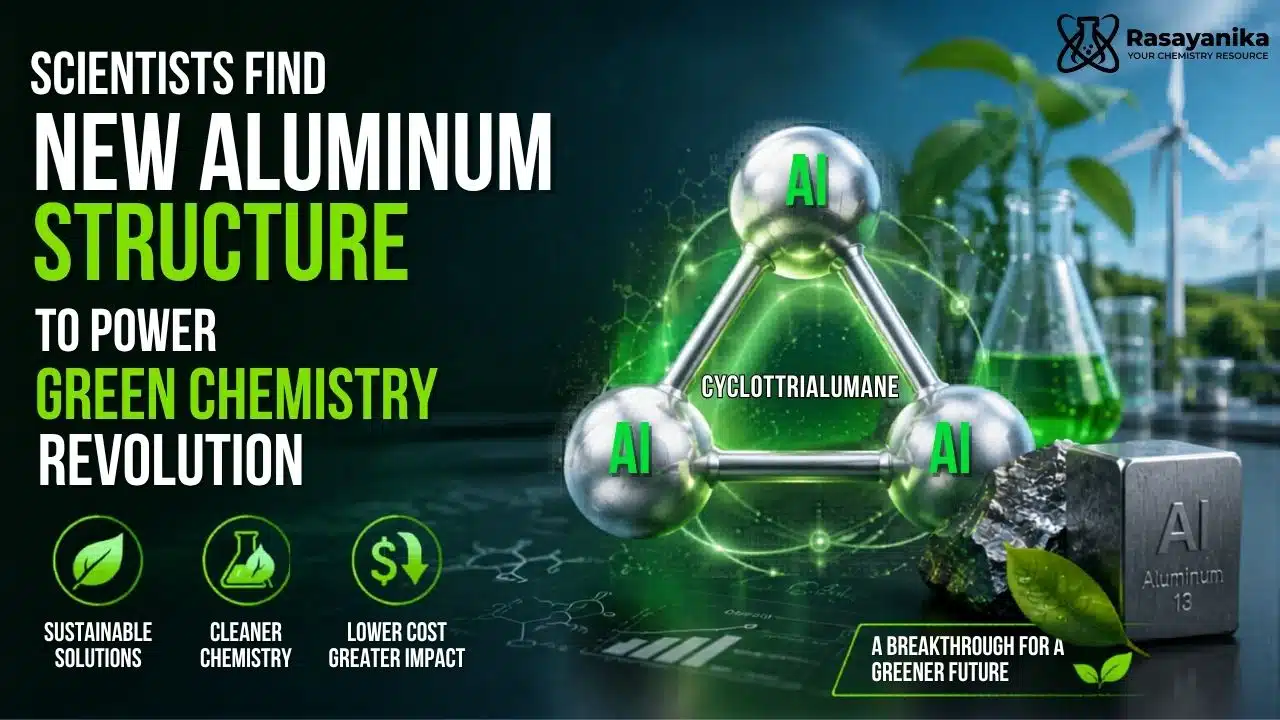
This study, published in Nature Communications, shows that these aluminum molecules can break very strong chemical bonds. The researchers also found new molecular shapes that have never been seen before. One of the most important is called cyclotrialumane, where three aluminum atoms form a triangle shape. This structure stays stable even in liquids, making it very useful for different reactions.
The cyclotrialumane structure allows for high-energy chemical reactions. For example, it can help break down hydrogen molecules or create longer carbon chains using simple gases like ethylene. This will help to create chemicals and materials that are more environmentally friendly.
Currently, many industries rely on rare metals such as platinum and palladium. They are expensive, hard to come by, and usually mined using procedures that are difficult to achieve, therefore damaging the ecosystem and increasing costs.
According to Dr. Bakewell, aluminum offers a more viable alternative than the rare metals due to its abundance and roughly 20,000 times lower price than platinum; thus, aluminum plays a critical role in the advancement of green chemistry, where the aim is to reduce pollution and provide safer materials.
The team is not only copying what rare metals do, but also discovering completely new reactions. Using cyclotrialumane, they have created new structures that include rings made of aluminum and carbon atoms. These reactions have never been seen before.
This could help scientists build new materials with special properties and improve how complex chemicals are made.
The research is still in the early stage, but the results are promising. Scientists believe this work could lead to safer and more eco-friendly methods in green chemistry, reducing costs, pollution, and the need for rare metals in the future.